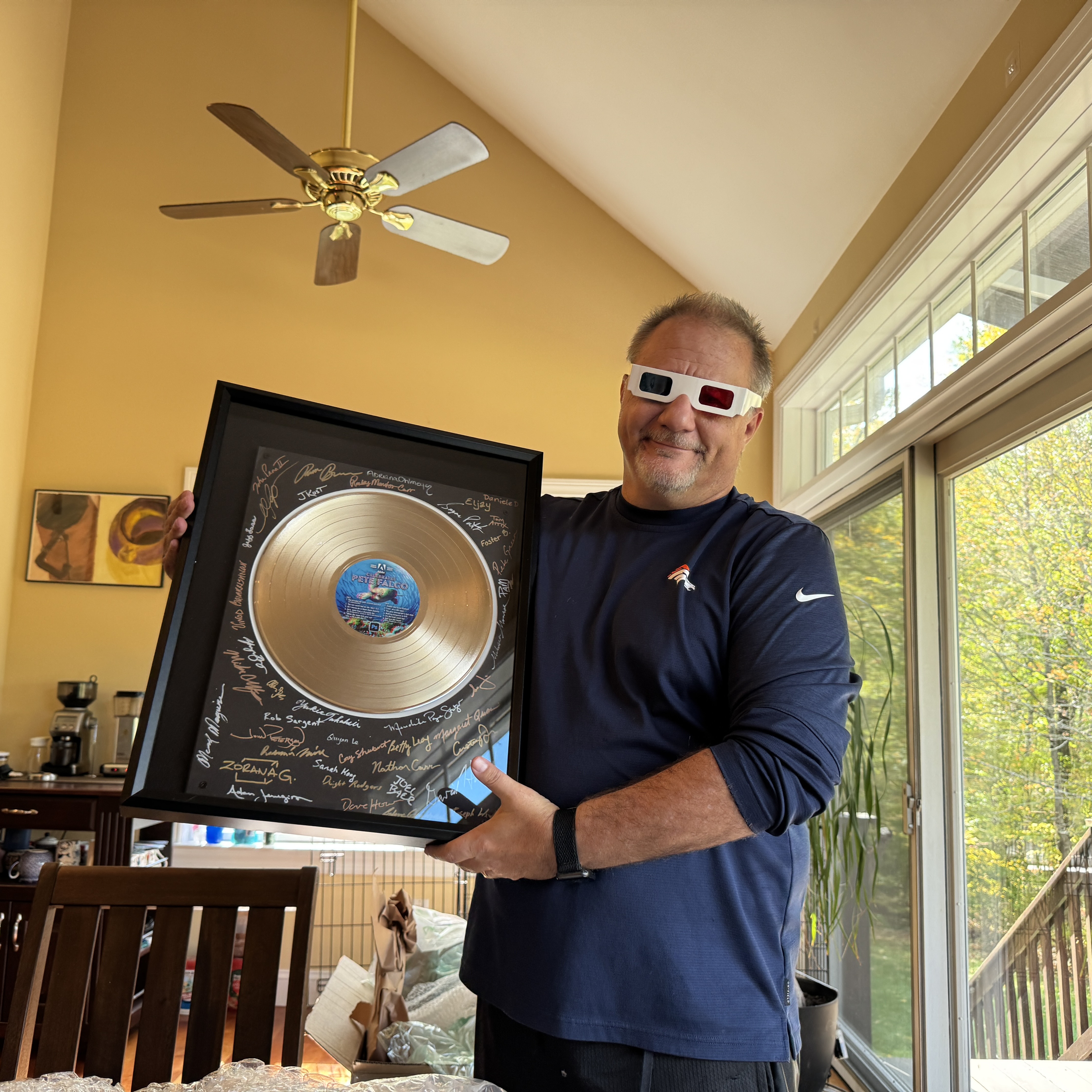
I spent 22 years at Adobe, working with some of the most extraordinary engineers, artists, designers, and product people I’ve ever known. Together, we built things that changed how people create, and I was lucky enough to be part of it. When I left in August 2025, I was heartbroken. I didn’t stop loving Adobe when I left. I was heartbroken because I loved it. And more than anything, I loved the people.
Adobe was my professional home for more than two decades. I had the opportunity to work on some incredible projects, solve some genuinely difficult engineering problems, and learn from people who were among the very best at what they did. There were long nights, impossible deadlines, spectacular successes, and plenty of things that didn’t go quite as planned. But what I remember most isn’t the software. It’s the people I built it with. The conversations, the arguments over how something should work, the laughter, and those wonderful moments when something we’d been struggling with finally came together. I loved being an engineer at Adobe, and I loved being part of that team.
I Was Supposed to Retire
That was the plan, anyway. Collect trading cards, enjoy life, and maybe find a few interesting things to keep myself busy. I moved to a lake, bought a boat, started Candlewood Collectibles, and got started with Instacard with some support from my friend Ben Morrow. I began thinking about how technology could make collecting more interesting. Then, naturally, I started writing code.
I had an idea for a world called Hope, with a character named Collector, where cards could be more than pictures. They could carry artwork, assets, information, and entire experiences. They could be collected, shared, traded, and brought to life. Everything is a card.
A Card Recognizer Got Completely Out of Hand
Of course, I needed a way to recognize trading cards, so I built Identifire. But that turned out to be a much harder problem than it seemed. I needed a system for validating the scans, and I wanted to decompose each image into its component parts to help the OCR. If I had card templates that told me where to look for the data on each card, I could nail the OCR.
Then I needed tools to create those templates, manage the hundreds of thousands of cards in the registry, and eventually build experiences around them that would delight our users. One thing led to another, and before I quite knew what had happened, I’d built a desktop application, a creative suite, an IDE, and an operating system. Apparently, retirement wasn’t going very well. Somewhere along the way, a card recognizer got completely out of hand, and CinterForge was born.
Putting Creators Back in Control
As I built all of this, I kept coming back to something I believe deeply: creative professionals should be in control of their own creative process. Somewhere along the way, we’ve made creating things increasingly dependent on services, subscriptions, cloud connections, and business models that put more distance between artists and their tools. I wanted to see if we could do something different.
I want people to own their tools, own their work, and have the freedom to create without asking permission. That means powerful software that runs on their own computers, works without an internet connection, and doesn’t charge them every time inspiration strikes. AI is part of that story, but it isn’t the point. It’s simply another tool that should work for the artist, not the other way around.
That’s what we’re trying to build with CinterForge. A creative platform that puts the power back in the hands of the people making things. Much of what we’re building is open source, because I believe people should be able to understand, extend, and improve the tools they depend on. We’re also building a sustainable business around it, because great tools require great people, and I want to build a company that can support both.
The People I Miss
But the real reason I’m writing this isn’t to explain the technology. It’s because I miss you. For 22 years, I worked alongside people who challenged me, trusted me, taught me, protected me, and made me a better engineer and a better person. Some of you handed me problems that seemed impossible and trusted me to find a way through them. Some of you stood up for me when I needed someone in my corner. And some of you simply made the difficult days easier by being there.
I learned what great engineering looks like from you, but I also learned what it means to be part of a team where people genuinely care about one another. We built incredible things together, and somewhere along the way, colleagues became friends and friends became family. Leaving that behind was one of the hardest things I’ve ever done.
Looking Forward
On October 27, we’re introducing CinterForge to the world. It’s early, and there’s still an enormous amount to build, but I wanted you to see it first. Not because I’m trying to prove anything or compete with the people I spent my career working beside, but because you’re part of the reason it exists. Everything I’ve built since leaving carries something I learned during those 22 years, and I hope you’ll recognize a little of yourselves in it.
I don’t know exactly where this adventure will take me. I only know that I still love writing code, solving impossible problems, and building things that give people the freedom to create. Those are the things that brought me to Adobe in the first place, and they’re the things I carried with me when I left. If anything, this past year has reminded me just how much I love being an engineer. Give me an interesting problem, a computer, and the freedom to figure it out, and I’m a happy guy. Apparently, I just need someone to tell me when to stop.
An Open Invitation
And if any of this sounds like something you’d love to be part of, I’d love to hear from you. We’re a small company with enormous ambitions, and we’re going to need extraordinary people to make them real. Engineers, artists, designers, product managers, and people who believe creative tools should belong to the people who use them. Whether you want to contribute to the open-source effort, help us build products, or perhaps someday make CinterForge your professional home, I’d love to talk.
There is a lot of work ahead, and I’d be thrilled to work alongside some familiar faces again. Whether you’re “retired” and looking for a new adventure or just curious about what we’re building, my door is always open.
Thank you for 22 extraordinary years, for the trust, the friendship, the laughter, and the opportunity to do work that mattered. I miss you all more than you know, and I wouldn’t be doing any of this without you.
With love,
Pete